

As Saddam Hussein fell through the trap door at the end of a hangman’s noose his death was deservingly just, and ironically merciful.
Saddam Hussein, for instance, escaped the fate of Nuri as-Said, the prime minister to Iraq’s kings, summarily shot after being captured while attempting to flee the capital disguised as a woman after the overthrow of the monarchy in July 1958. Nuri as-Said’s body was disinterred, mutilated, burned and dragged through the streets of Baghdad before being disposed.
But once Saddam was pulled out of a spider’s hole in December 2003 by American soldiers, the tyrant knew fate had dealt him a not unkindly hand in sparing him the sort of savage death to which he had consigned countless numbers of Iraqis.
The hanging of Saddam Hussein after a trial by an Iraqi court—let us contemptuously dismiss all the nonsense of victor’s justice administered under questionable arrangements—was a fitting end to a horrendously evil period in the history of a country over-burdened with a cruel past.
In the land between two rivers—Mesopotamia—tyranny has been the norm for the longest while, and tyrants have sought to exceed each other in the provision of harsh rule. The pattern was set by the brutal murder of the prophet of Islam’s grandson, Husayn, in 680 and his severed head carried to the presence of the Caliph in Damascus.
The sectarian mayhem that has gripped Iraq since Saddam Hussein’s fall has a history reaching back to that horrible deed of beheading Husayn by the Caliph’s army. This history could be kept buried only by the continuing brutality of tyrants—Saddam being in a category of his own—and at a price ever-mounting paid by Iraqis.
But the liberation of Iraq from Saddam’s tyranny by American support—and it could only have been the U.S. prepared to bear the costs in blood and treasure in liberating another people as it has done on innumerable occasions—holds out the promise, however remote it might seem presently, for Iraqis to leave behind them the demons of tyrants and build a country that might incrementally, warts and all, mature into a democracy.
Iraq’s pathology in display is not exclusively Iraqi. It is the pathology of the Arab-Muslim world. But in Iraq under Saddam Hussein this pathology of tribal and sectarian politics hardened into the sort of absolute power possessed by a tyrant to torture and kill people unquestioningly at any and all times.
Much has been made by the critics of U.S. intervention in Iraq of the criminality of those American soldiers who stained their country’s honour in Abu Ghraib, the notorious prison run by Saddam Hussein’s regime. The fact is Iraqis have known that their entire country was one sick Abu Ghraib under Saddam’s tyranny, and its neighbours so many other Abu Ghraibs in varying degrees of notoriety.
An external power was needed to lance the rotting boil of Iraq as an Abu Ghraib, and let the diseased puss flow out of the wound for the rest of the body hopefully to heal in time.
Saddam Hussein’s trial and execution will stand as a milestone in Iraqi and Arab history. A tyrant was confronted with his crimes, and then justice was done by a people crippled by the long years of the tyrant’s rule.
It is now for Iraqis to awaken, as they must, to the new reality of their country and the world after their tyrant’s demise that they are authors of their own history for better or worse, and blaming others for their woes will merely be a pathetic admission of their own inadequacy.
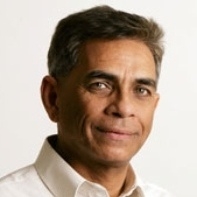
He is a member of the Board of Directors for the Center for Islamic Pluralism based in Washington, D.C., a Senior Fellow with the Canadian Coalition for Democracies, and an academic-consultant with the Center for Security Policy in Washington, D.C. He has been a consultant with CIDA on development issues and has published widely in academic journals on foreign policy matters and area studies of the Middle East and South Asia.
Mansur is featured on the documentary Obsession: Radical Islam's War Against the West produced by the David Horowitz Freedom Center. He also unsuccessfully ran for the Canadian Alliance party in 2000.
Mansur has been accused by Canadian Islamic Congress of using "provocative, self-serving rhetoric", and for "promoting an anti-Arab and anti-Muslim agenda".
He is an Ismaili Muslim.
At a press conference on October 2, 2008, Mansur stated that "Islam is my private life, my conscience...[but] my faith does not take precedence over my duties...to Canada and its constitution, which I embrace freely;" "I am first and most importantly a Canadian;" "only in a free society will you find Islam as a faith and not a political religion." Mansur also criticized New Democratic Party Leader Jack Layton, whom Mansur said "has gone to bed with Islamists", because he is running candidates in Ontario and Quebec who are closely identified with the push for Sharia law.
- Israel: Decades-old conflict not about to cease - Saturday November 24, 2012 at 1:56 pm
- The better man lost the U.S. election - Saturday November 10, 2012 at 9:16 am
- The puzzle in U.S. presidential elections - Saturday November 3, 2012 at 8:43 am