


The G8 summit next month in Scotland will assemble the world’s major powers for their annual meeting, and Africa will head their agenda.
The African dilemma of persistent poverty and endemic conflict has left the continent lurching in a downward spiral with no exit in sight.
The list of African quarrels and tragedies has taken a dimension of its own, and while the outside world offers endless pieties leavened with periodic financial aid, the will to effectively change the course of African history is sorely missing both within and outside the continent.
Darfur symbolizes the grim reality of African tragedy.
A decade after the Rwandan genocide—in a world crowded with living memory of the Nazi Holocaust in Europe, disclosures of Stalin’s gulags in the former Soviet Union, Mao’s re-education camps in China, and steady revelations from the killing fields of Vietnam, Cambodia, the former East Pakistan (now Bangladesh), Afghanistan, Algeria, Iraq and Bosnia—we learn daily of atrocities committed against the hapless poor of Darfur by criminal stooges of the Sudanese government.
Darfur also speaks to the unwillingness and fatigue of outside powers, in particular the G8 members—Britain, Canada, France, Germany, Italy, Japan, Russia and the United States—to intervene decisively and provide a protective shield to an abused population there, as was done in Kosovo.
Moreover, Darfur is symptomatic of the African Union’s incapacity and criminal negligence to confront the continent’s own demons. Since republican Egypt took control of the Suez Canal in 1956, and Ghana in equatorial Africa acquired independence in 1957, it has been commonplace for Africans and their apologists in the West to place all blame for the continent’s woes on colonialism.
At some point, however, former colonized peoples must begin to take responsibility themselves on how they have ruined their inheritance as they bartered their fortune in foolishly taking sides during the Cold War years.
Somalia is an example where the leadership perilously played geopolitics for its own sake, abandoned the people to paltry resources and clan rivalries, and ruined a country that now exists only in name.
It ultimately rests with Africa’s leaders and peoples to unshackle their continent from its legacy of tribal and clan warfare; of slavery whose practices are still visible in places such as Sudan; of racism that bedevils countries that once produced surplus food, but now cannot feed its own children, as in Zimbabwe; of religious quarrels that consume ethnically divided people in lands rich with resources, as in Nigeria and the Democratic Republic of Congo; of diseases such as HIV/AIDS that plague states of southern Africa; and of environmental depredations that have produced regular famines, as in Eritrea and Ethiopia.
External assistance will only be meaningful in lifting Africa when the continent’s leaders begin—at a minimum—to respect their own citizens, and commit themselves to democratic nation-building.
Otherwise, Africa’s genuine claims on the world’s rich and powerful will be responded to periodically with rhetorical flourishes, as former prime minister Jean Chretien did when he hosted the 2002 G8 summit at Kananaskis, Alta., and pledged support to the New Partnership for African Development (NePAD).
That pledge has been filed away in some other acronym of bureaucratic fiddling for African development, while in Darfur children starve, women are raped and men are beaten to death by fellow Africans.
But Africa is obsessed with Europe, and Africans have been taught to see themselves as wards and victims of the white West.
Such a selective view of history is the staple of the boutique-left that fills the corridors of United Nations agencies and aid organizations, and is in itself part of the problem, not the solution, of Africa’s woes.
Africans might do better by learning from Asia, with its legacy of colonialism yet now poised, with its tiger economies and two waking giants—China and India—to make the present century its own.
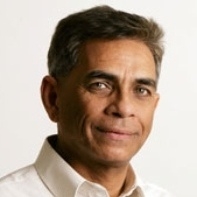
He is a member of the Board of Directors for the Center for Islamic Pluralism based in Washington, D.C., a Senior Fellow with the Canadian Coalition for Democracies, and an academic-consultant with the Center for Security Policy in Washington, D.C. He has been a consultant with CIDA on development issues and has published widely in academic journals on foreign policy matters and area studies of the Middle East and South Asia.
Mansur is featured on the documentary Obsession: Radical Islam's War Against the West produced by the David Horowitz Freedom Center. He also unsuccessfully ran for the Canadian Alliance party in 2000.
Mansur has been accused by Canadian Islamic Congress of using "provocative, self-serving rhetoric", and for "promoting an anti-Arab and anti-Muslim agenda".
He is an Ismaili Muslim.
At a press conference on October 2, 2008, Mansur stated that "Islam is my private life, my conscience...[but] my faith does not take precedence over my duties...to Canada and its constitution, which I embrace freely;" "I am first and most importantly a Canadian;" "only in a free society will you find Islam as a faith and not a political religion." Mansur also criticized New Democratic Party Leader Jack Layton, whom Mansur said "has gone to bed with Islamists", because he is running candidates in Ontario and Quebec who are closely identified with the push for Sharia law.
- Israel: Decades-old conflict not about to cease - Saturday November 24, 2012 at 1:56 pm
- The better man lost the U.S. election - Saturday November 10, 2012 at 9:16 am
- The puzzle in U.S. presidential elections - Saturday November 3, 2012 at 8:43 am