

In the spring of 1915 with Europe at war, the Turkish rulers of the Ottoman Empire ordered the deportation and killing of the Armenian population within their territory.
Between April 1915 and the end of the war in November 1918, the organized destruction of a people identified by ethnicity and religion was conducted by a government that ruled an empire in the name of Islam.
The nationalist Turks who succeeded the defeated power-holders in Istanbul continued the massacres of Armenians in eastern Anatolia and into the Caucasus. Some 1.5 million Armenians perished during this period between 1915 and 1923.
This destruction of the Armenian people was the first genocide of the 20th century, a prelude to what would come later under Hitler’s Third Reich as the “final solution” for the Jews.
It took nearly 90 years for the Canadian parliament—by a vote of 153 (yeas) to 68 (nays) on April 21, 2004—to pass a resolution acknowledging the Armenian genocide and condemning it as a crime against humanity.
Neither the passage of time required for such an acknowledgment nor the number of parliamentarians voting on record against it came as a surprise, since the mass murderers of our age well understand that the human capacity to deny evil is far greater than our inclination to oppose it.
A mere 24 countries around the world have acknowledged the facts of the Armenian genocide, and with the exception of Lebanon—possessing a sizable Christian population—there is a wall of silence on this subject from the Muslim-majority member states of the United Nations.
On April 24 every year, Armenians remember their dead. It was on this night in 1915 the Turkish government ordered arrests of Armenian community leaders in Istanbul, marking the start of the genocide.
Turkey continues to dispute what occurred. It is a sensitive issue, and Turks willing to critically examine the events relating to the Armenian genocide face persecution from authorities for “insulting Turkishness.”
Orhan Pamuk, the widely translated and respected Turkish writer, was charged last year with the crime of insulting Turks when he told a Swiss newspaper that “30,000 Kurds and one million Armenians were killed in these lands, and nobody but me dares talk about it.” The case was dropped in January this year under heavy pressure from the European Union.
That the world is a cynical place is not news, however, nor is the fact that human nature is flawed.
Even as I write this column, the systematic depredation of the wretchedly poor in Darfur remains unabated—while the United Nations and its grandees, led by Kofi Annan, quibble over the meaning of “genocide.”
Historians and philosophers struggle to find lessons from the tales of human wickedness, and teach future generations to do better.
It is in vain, for the collective ears of humanity remain stuffed with wax. Prophets have admonished, as Amos of the Old Testament did: “They drink wine in bowls, and anoint themselves with the finest oils; but they are not grieved over the ruin of Joseph.”
The lesson of history is that, to paraphrase Santayana, there is no lesson.
Each generation gets tested by the evil of its time and, in learning nothing from the past, fashions its denial of crimes witnessed.
The present generation, not to be outdone in ingenuity, incessantly speaks of being history’s victim and denies bearing any responsibility or accountability for the ruin of Joseph.

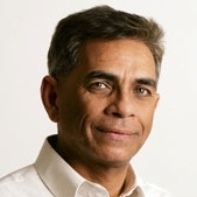
He is a member of the Board of Directors for the Center for Islamic Pluralism based in Washington, D.C., a Senior Fellow with the Canadian Coalition for Democracies, and an academic-consultant with the Center for Security Policy in Washington, D.C. He has been a consultant with CIDA on development issues and has published widely in academic journals on foreign policy matters and area studies of the Middle East and South Asia.
Mansur is featured on the documentary Obsession: Radical Islam's War Against the West produced by the David Horowitz Freedom Center. He also unsuccessfully ran for the Canadian Alliance party in 2000.
Mansur has been accused by Canadian Islamic Congress of using "provocative, self-serving rhetoric", and for "promoting an anti-Arab and anti-Muslim agenda".
He is an Ismaili Muslim.
At a press conference on October 2, 2008, Mansur stated that "Islam is my private life, my conscience...[but] my faith does not take precedence over my duties...to Canada and its constitution, which I embrace freely;" "I am first and most importantly a Canadian;" "only in a free society will you find Islam as a faith and not a political religion." Mansur also criticized New Democratic Party Leader Jack Layton, whom Mansur said "has gone to bed with Islamists", because he is running candidates in Ontario and Quebec who are closely identified with the push for Sharia law.
- Israel: Decades-old conflict not about to cease - Saturday November 24, 2012 at 1:56 pm
- The better man lost the U.S. election - Saturday November 10, 2012 at 9:16 am
- The puzzle in U.S. presidential elections - Saturday November 3, 2012 at 8:43 am


